If you grew up during the golden age of broadcasting, you know there is much more to retro television than heavily syndicated giants like I Love Lucy. The true heart of 1960s and 1970s entertainment often lived in the quirky, short-lived series that flickered across living room screens for only a season or two. From Irwin Allen’s wild science-fiction adventures to the early days of the single-parent sitcom, these forgotten gems captured the imagination of the Baby Boomer generation before quietly vanishing into studio vaults. Revisiting these classic shows offers more than a simple trip down memory lane; it provides a fascinating glimpse into how network broadcasting evolved during a time of immense cultural change.

Why Nostalgia TV Matters Today
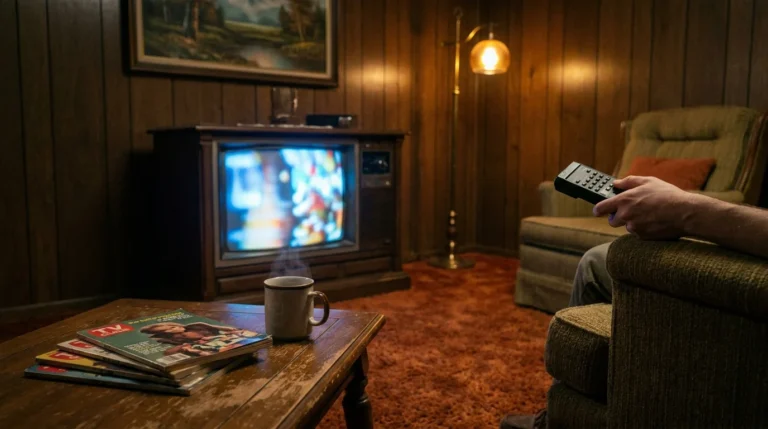
There is a distinct comfort in looking back at the television landscape of our youth. Before the era of streaming on demand and infinite cable channels, television was a communal, scheduled event. Families gathered around a single wooden console set at a specific hour to catch the latest episode of their favorite series. The shows from this era reflect the rapid societal shifts occurring in the real world—from Cold War paranoia making its way into science fiction, to the counterculture movement reshaping how networks portrayed young adults.
While juggernauts like M*A*S*H or The Andy Griffith Show have never really left the airwaves, a vibrant secondary tier of shows exists just below the surface of our collective memory. These programs took creative risks, launched the careers of major Hollywood stars, and introduced concepts that laid the groundwork for modern prestigious television. Taking the time to remember them helps preserve an important chapter of broadcast history.
1. The Many Loves of Dobie Gillis (1959–1963)
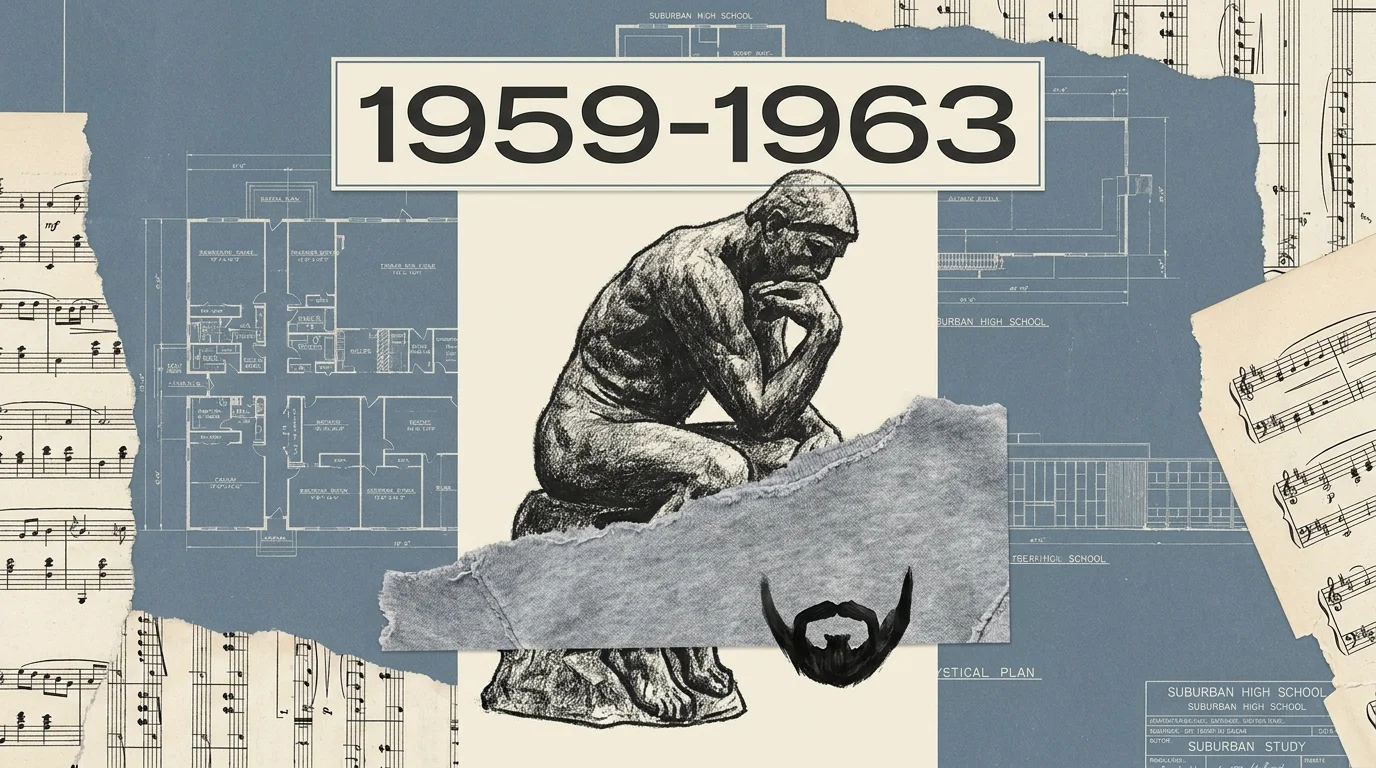
Decades before high school dramas ruled the airwaves, The Many Loves of Dobie Gillis broke entirely new ground. According to television history archives, this was the very first American TV program produced for a major network to feature teenagers as the leading characters. Dwayne Hickman played the lovelorn Dobie, who frequently broke the fourth wall to speak directly to the audience while sitting beside a replica of Auguste Rodin’s “The Thinker” statue.
However, the true breakout star was Bob Denver as Dobie’s best friend, Maynard G. Krebs. Maynard introduced the beatnik subculture to mainstream American living rooms, instantly recognizable by his goatee, ragged sweatshirt, and sheer terror at the mere mention of the word “work.” The series was also a fantastic launching pad for young talent, featuring early career appearances by Tuesday Weld and Warren Beatty.
2. F Troop (1965–1967)
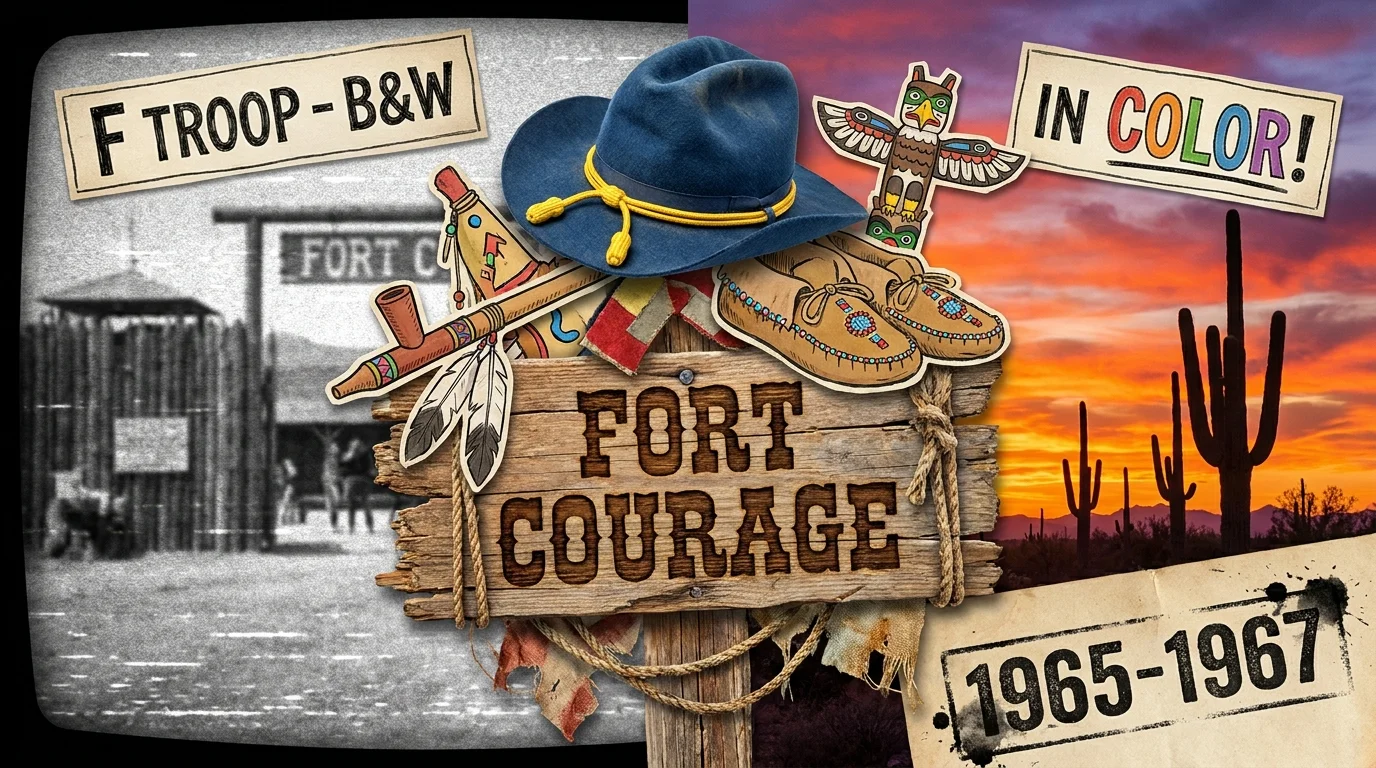
Set at the remote Fort Courage following the American Civil War, this wildly satirical Western followed the chronically inept Captain Wilton Parmenter (Ken Berry) as he unwittingly took command of the least useful soldiers in the U.S. Army. Parmenter only received his promotion because he accidentally led a cavalry charge in the right direction when he sneezed.
Much of the show’s comedy stemmed from the illegal business schemes run by the crafty Sergeant O’Rourke (Forrest Tucker) and Corporal Agarn (Larry Storch). They routinely collaborated with the local, peace-loving Hekawi tribe to manufacture and sell Native American souvenirs to passing tourists. Though it only ran for 65 episodes—the first season broadcast in black-and-white, the second in color—its physical comedy and slapstick humor left a lasting impression on audiences.
3. The Time Tunnel (1966–1967)
Producer Irwin Allen would eventually become universally known as the “Master of Disaster” for his 1970s cinematic blockbusters like The Towering Inferno, but in 1966, he turned his sights on the past and the future. According to historical records on Irwin Allen’s career, The Time Tunnel was his third major science-fiction television outing following Voyage to the Bottom of the Sea and Lost in Space.
The premise was delightfully ambitious; deep beneath the Arizona desert, the U.S. government operated “Project Tic-Toc,” a sprawling, 800-floor subterranean complex housing a massive time machine. Scientists Tony Newman (James Darren) and Doug Phillips (Robert Colbert) found themselves hopelessly lost in the timestream, jumping weekly from the deck of the sinking Titanic to the attack on Pearl Harbor. The hypnotic, spiraling black-and-white tunnel remains an enduring, iconic image of 1960s pop culture.
4. The Invaders (1967–1968)
When architect David Vincent witnessed a flying saucer land near a deserted diner, he kicked off one of the most intense, paranoia-fueled dramas of the late 1960s. Produced by Quinn Martin, The Invaders ran for 43 episodes and presented a chilling premise—alien beings from a dying planet were already here, disguising themselves as ordinary humans to slowly infiltrate the highest levels of human society.
As documented by the show’s official entry, these extraterrestrials possessed a few distinct physical traits: they lacked a pulse, showed no emotion, and often exhibited a deformed fourth finger that could not bend. When killed, they would glow red and disintegrate entirely, continuously leaving David Vincent without the physical proof he needed to convince a skeptical public. The show perfectly captured the Cold War anxieties of its era, and Roy Thinnes anchored the series with a genuinely compelling, determined performance.
5. It Takes a Thief (1968–1970)
Long before sophisticated heist movies dominated the modern box office, Robert Wagner brought suave charm to the small screen as Alexander Mundy. Serving time in San Jobel prison, the polished cat burglar was offered a unique and highly unusual deal by the Secret Intelligence Agency (SIA): steal for the United States government in exchange for his complete freedom.
His handler, Noah Bain (played by Malachi Throne), summarized the premise perfectly in the opening credits, explaining that he was not asking Mundy to spy—he was merely asking him to steal. The legendary Fred Astaire later joined the cast in the third season as Mundy’s equally sophisticated father, Alistair, adding an extra layer of elegance and old-Hollywood charm to the globe-trotting espionage capers.
6. The Ghost & Mrs. Muir (1968–1970)
Based on the acclaimed 1947 film of the same name, this charming sitcom starred Hope Lange as Carolyn Muir, a young widow who packed up her family and moved into a beautiful seaside cottage in the fictional village of Schooner Bay, Maine. She quickly discovered that her new home was heavily haunted by its former owner, the stubborn and blustery 19th-century sea captain Daniel Gregg.
Played with theatrical brilliance by Edward Mulhare, the ghostly captain initially tried to scare the family away but eventually grew quite fond of them. Charles Nelson Reilly provided consistent, magnificent comic relief as the captain’s cowardly descendant, Claymore Gregg. Despite Lange winning two consecutive Emmy Awards for her lead performance, the show struggled in the ratings, shifting from NBC to ABC before being permanently canceled after just two seasons.
7. Then Came Bronson (1969–1970)
Arriving just as the counterculture movement fundamentally reshaped American society, this hour-long drama tapped directly into the era’s overwhelming desire for existential freedom. Michael Parks starred as Jim Bronson, a disillusioned newspaper reporter who abruptly quit his job following the tragic suicide of his best friend.
Donning a signature watch cap and riding a 1969 Harley-Davidson Sportster, Bronson traveled the backroads of America taking odd jobs and searching for personal meaning. The show’s quiet, philosophical tone was a stark departure from standard, fast-paced network fare. The opening sequence featured Bronson paused at a traffic light alongside a harried commuter in a station wagon, perfectly capturing a generational divide and the overwhelming desire to simply drop out and ride away.
8. The Courtship of Eddie’s Father (1969–1972)
According to archived details about the series, the phenomenal chemistry between Bill Bixby and young actor Brandon Cruz was the true emotional core of this beloved sitcom. Bixby played Tom Corbett, a widowed magazine publisher trying to navigate modern life in Los Angeles while raising his bright, freckle-faced young son, Eddie.
Rather than leaning heavily on typical, forced sitcom gags, the show took the time to explore the genuine, touching dynamic of a single father and his child, aided heavily by their wise and discreet housekeeper, Mrs. Livingston (Miyoshi Umeki). Fans also distinctly remember the show’s incredibly catchy theme song, “Best Friend,” which was written and performed by the legendary singer-songwriter Harry Nilsson.
9. Room 222 (1969–1974)
Created by James L. Brooks—who would go on to massive success with The Mary Tyler Moore Show and The Simpsons—this comedy-drama broke the traditional sitcom mold by tackling highly contemporary social issues. Set at the fictional, racially integrated Walt Whitman High School in Los Angeles, the series followed the daily lives of the faculty and students.
Lloyd Haynes anchored the series as Pete Dixon, an optimistic and easygoing African American history teacher who gently guided his students through the complex cultural shifts of the late 1960s and early 1970s. The show seamlessly wove heavy topics like the Vietnam War, women’s rights, and race relations into highly relatable stories about everyday teenage life. It won an Emmy Award for Outstanding New Series, establishing a successful template for the character-driven dramedies that would flourish in the subsequent decades.
10. The Magician (1973–1974)
Bill Bixby struck television gold multiple times in his career, but nestled quietly between his leading roles on The Courtship of Eddie’s Father and The Incredible Hulk was this slick, highly unusual crime drama. Bixby played Anthony Blake, a wealthy illusionist and playboy philanthropist who lived in a private jet and used his mastery of stage magic to solve complex mysteries.
Because Bixby was an accomplished amateur magician in his personal life, he insisted on performing all of the sleight-of-hand tricks, escapes, and grand stage illusions himself without the aid of cheap camera tricks. Though it lasted only a single season—hampered in part by an industry-wide Writers Guild strike—the sight of Bixby speeding around Hollywood in a sleek white Corvette while fighting crime made an indelible mark on its dedicated audience.
Classic TV Shows at a Glance
If you want to track down these specific series, use this quick reference guide to verify you are looking for the correct original broadcast run:
| Show Title | Original Run | Original Network | Primary Genre |
|---|---|---|---|
| The Many Loves of Dobie Gillis | 1959–1963 | CBS | Teen Sitcom |
| F Troop | 1965–1967 | ABC | Satirical Western |
| The Time Tunnel | 1966–1967 | ABC | Science Fiction |
| The Invaders | 1967–1968 | ABC | Sci-Fi Drama |
| It Takes a Thief | 1968–1970 | ABC | Action / Espionage |
| The Ghost & Mrs. Muir | 1968–1970 | NBC / ABC | Supernatural Sitcom |
| Then Came Bronson | 1969–1970 | NBC | Adventure Drama |
| The Courtship of Eddie’s Father | 1969–1972 | ABC | Family Sitcom |
| Room 222 | 1969–1974 | ABC | Comedy-Drama |
| The Magician | 1973–1974 | NBC | Crime Drama |
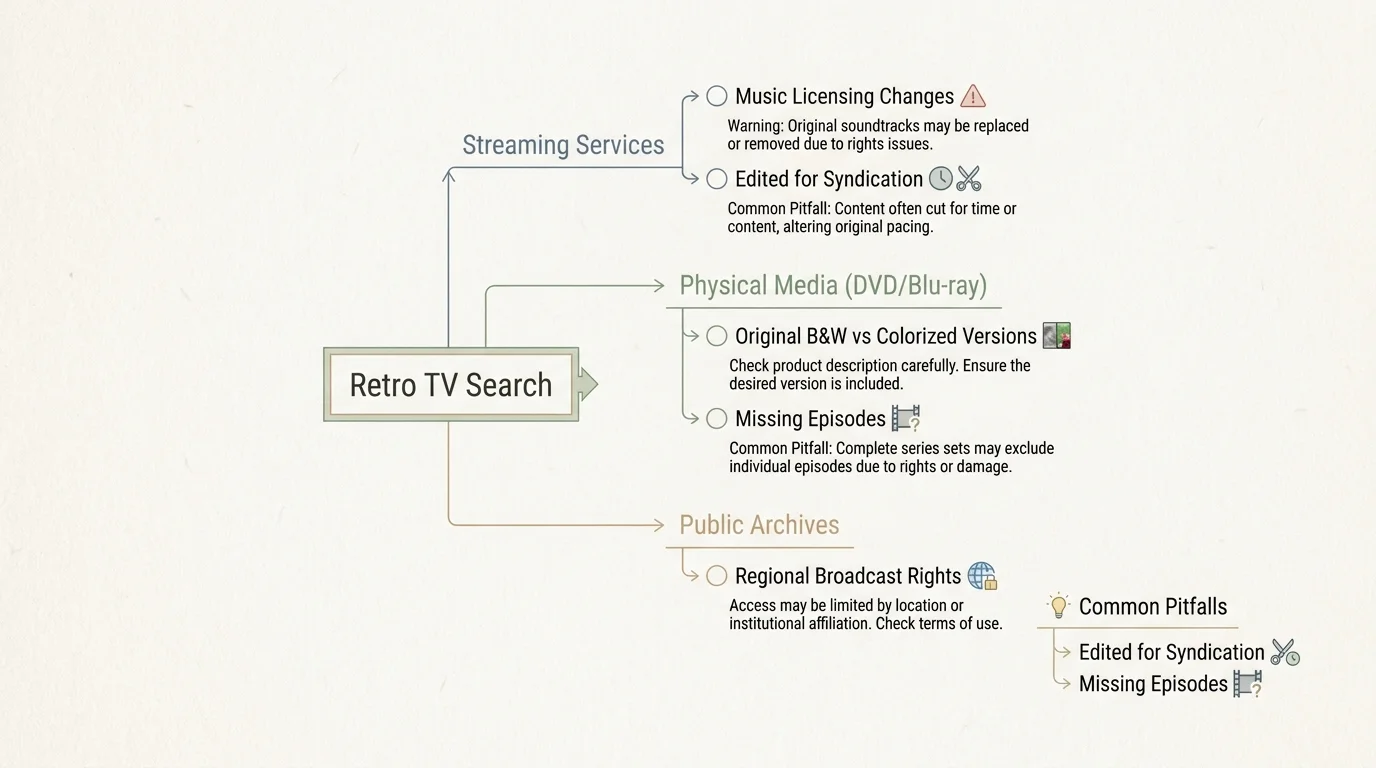
Things to Watch Out For When Hunting Down Retro TV
Tracking down your favorite short-lived shows from the 1960s and 1970s can sometimes turn into a frustrating digital scavenger hunt. Keep these common hurdles in mind as you search for your nostalgic favorites:
- Streaming Rights Roulette: Licensing agreements for older network television series change constantly. A show that appears on a free, ad-supported platform today might completely vanish by next month. It helps to check aggregate search tools regularly to see exactly where a specific show is currently hosted.
- Missing Music Rights: When retro shows finally make it to DVD or streaming platforms, you might notice that a beloved background song or even the original theme music has been replaced with generic instrumental tracks. Clearing the rights for 1960s pop songs is notoriously expensive, leading distributors to simply swap out the music rather than pay the exorbitant fees.
- Incomplete Series Sets: If you prefer physical media, be cautious when purchasing DVD box sets from third-party sellers. Fan-made bootlegs are incredibly common for niche shows that never received a proper studio release. Always check buyer reviews to ensure you are buying an official release, or at least be aware of the lower video quality that often accompanies unofficial collections.
Frequently Asked Questions
Where can I stream classic 1960s and 1970s TV shows?
Many classic programs are currently available on free, ad-supported streaming services like Tubi, Pluto TV, and The Roku Channel. Additionally, specialty digital broadcast networks such as MeTV and Antenna TV feature deep lineups of retro television programming available over the air.
Why do so many of these classic shows only have one or two seasons?
During the 1960s and 1970s, the three major broadcast networks—ABC, CBS, and NBC—competed fiercely for viewers. If a newly launched show was scheduled in the exact same time slot as a massive, established hit on a rival network, it rarely survived past its first season, regardless of how innovative or well-written the premise was.
What was the first American network TV show to focus primarily on teenagers?
The Many Loves of Dobie Gillis, which premiered on CBS in 1959, is widely recognized by television historians as the very first American program produced for a major network to feature teenagers as the leading characters.
Revisiting the television landscape of our youth allows us to reconnect with the imaginative stories that shaped our perspectives, made us laugh, and kept us glued to the screen week after week. Whether you decide to track down a dusty DVD box set or catch a late-night weekend marathon on a retro streaming channel, there is enduring value in celebrating the creative pioneers of classic broadcasting. Enjoy your nostalgic journey back through the timestream—no 800-floor subterranean complex required. This article provides general information only. Every reader’s situation is different—what works for others may not be the right fit for you. For personalized guidance on health, legal, or financial matters, consult a qualified professional.
Last updated: May 2026. Rules, prices, and details change—verify current information with official sources before acting on it.