
Before video games and smartphones commanded our attention, Friday nights revolved around the kitchen table, a pair of dice, and brightly colored cardboard. The 1960s and 1970s represented a golden age of board game innovation, introducing mechanical gimmicks, electronic sounds, and unforgettable 3D components that made every session feel like an event. While some staples from that era remain on modern shelves, many brilliant and quirky tabletop games have quietly vanished into attic boxes and thrift store bins. From magnetic clouds swallowing plastic ships to electronic crime scanners blaring through the living room, these ten vintage games delivered an unmatched tactile experience. Revisit these forgotten mid-century classics that are well worth digging out for your next family game night.
1. Mystery Date (1965)
If you grew up in the mid-1960s, you likely remember the unmistakable jingle from the Mystery Date television commercial. Released by Milton Bradley in 1965, this game was the brainchild of the legendary toy design firm Marvin Glass and Associates. The game presented a simple but highly engaging premise: you had to assemble a complete three-piece outfit—such as skiing attire or a formal dress—by drawing and trading cards as you moved around the board.
The true genius of Mystery Date lay in its physical centerpiece. A large, white plastic door sat squarely in the middle of the game board. Once you collected a matching outfit, you earned the right to spin the doorknob and open the door. If the date waiting behind the door wore an outfit that matched yours, you won the game. However, the ever-present threat of the “dud”—a disheveled young man who ruined your plans—kept players in a constant state of suspense. It was a purely mechanical thrill that modern app-based games struggle to replicate.

2. Twister (1966)
Twister holds a unique place in tabletop history because it dared to make the players themselves the playing pieces. Invented by Reyn Guyer—originally as a promotional tie-in for a shoe polish campaign—the concept was refined by designers Charles Foley and Neil Rabens before Milton Bradley published it. The game consisted of nothing more than a vinyl mat adorned with colored circles and a simple cardboard spinner.
According to research published in Smithsonian Magazine, the game faced immense initial resistance from conservative retailers who considered the physical proximity required by the game to be inappropriate. Some competitors even referred to it dismissively as “sex in a box.” The game was on the verge of cancellation until a brilliant marketing maneuver placed it on The Tonight Show on May 3, 1966. Host Johnny Carson played a round with actress Eva Gabor, and the ensuing laughter proved to the American public that the game was harmless, hilarious fun. It remains an enduring classic for family gatherings and parties.
3. Acquire (1964)
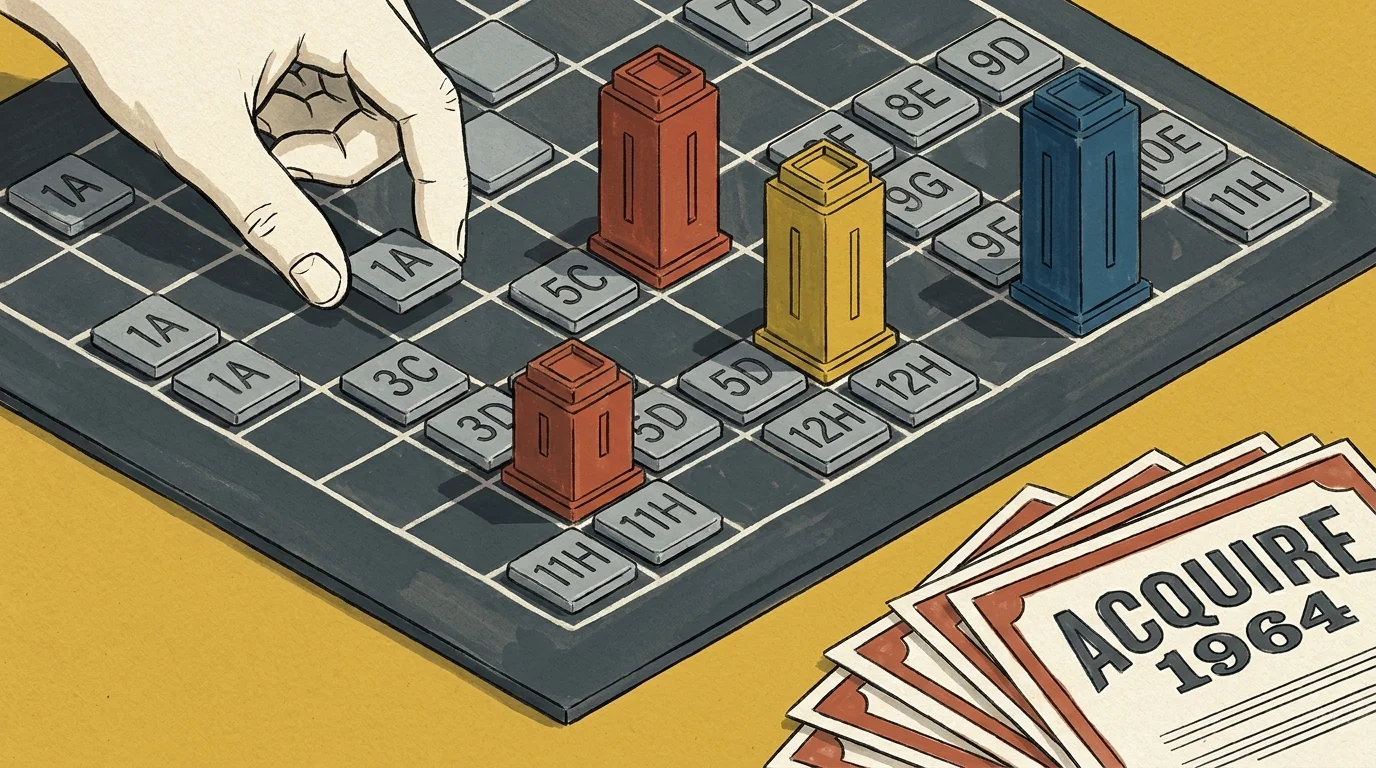
While many games of this era relied heavily on luck, Acquire rewarded strategy, observation, and careful financial planning. Designed by the prolific game creator Sid Sackson, Acquire was part of the famous 3M Bookshelf Games series, which featured tall, elegant boxes designed to blend in seamlessly with the hardbound books in your library.
In Acquire, you take on the role of a real estate tycoon investing in hotel chains. Players place numbered tiles onto a grid, gradually forming distinct corporations. When one growing chain touches another, a merger occurs. The player holding the majority stock in the acquired company receives a lucrative cash bonus, which can then be reinvested into other expanding chains. You must constantly weigh the risk of holding onto stock against the immediate benefit of cashing out. Because it requires genuine economic foresight rather than just a lucky roll of the dice, Acquire maintains a highly respected reputation among modern board game enthusiasts.

4. Operation (1965)
Few games test your fine motor skills and patience quite like Operation. Invented by John Spinello while he was an industrial design student at the University of Illinois, the prototype utilized a 12-volt battery and a loud bell. Spinello sold the rights to toy designer Marvin Glass for a mere $500, and Milton Bradley eventually brought the game to the mass market in 1965.
The game centers around “Cavity Sam,” a cartoonish patient laid out on an operating table. As the surgeon, you use a pair of metal tweezers connected to the board by a wire to carefully extract plastic ailments from tiny cavities. You draw cards directing you to remove specific pieces—like the “Spare Ribs” or the “Butterflies in Stomach.” If your tweezers brush the metal edges of the cavity, you close the electrical circuit, triggering an obnoxious buzzer and causing Sam’s red lightbulb nose to flash. The sudden jolt of the buzzer never fails to startle players, making it a timeless test of steady hands.

5. Masterpiece (1970)
Parker Brothers elevated the standard wealth-accumulation board game by introducing an element of high culture with Masterpiece. The game casts players as eccentric art collectors participating in high-stakes international auctions. Instead of buying imaginary properties, you bid on actual masterpieces; the game includes a deck of full-color postcards featuring famous works by artists like Rembrandt, Renoir, and Van Gogh.
The strategic twist in Masterpiece revolves around hidden information. Whenever a painting is put up for auction, a random value card is secretly clipped to the back of it. The value can range anywhere from $1,000,000 down to absolutely nothing—designating the piece as a worthless forgery. Only the player who currently owns the painting knows its true value. This mechanic transforms the game into a tense exercise in bluffing. You must confidently bid up the price of a forgery to trick your opponents into overpaying, or subtly downplay a genuine masterpiece so you can steal it for a bargain.
6. King Oil (1974)
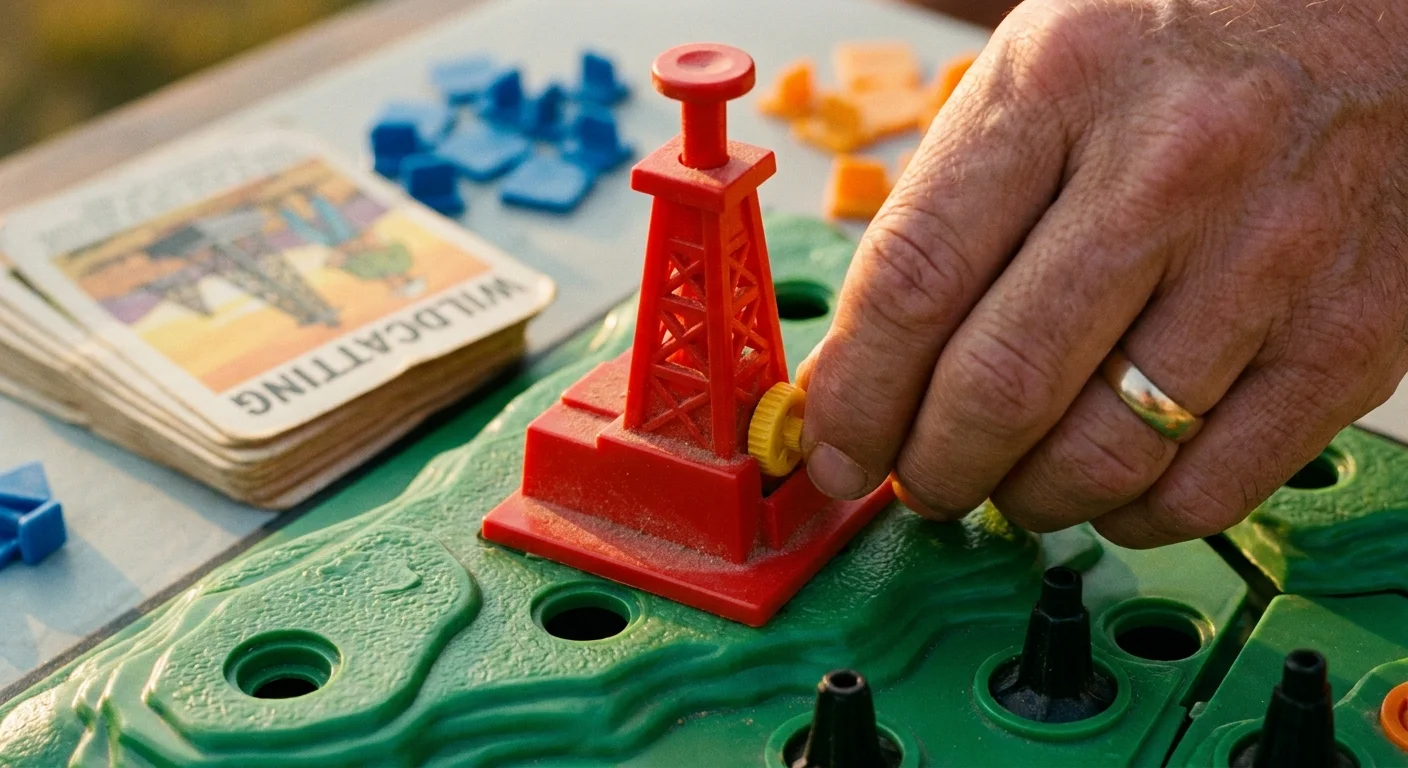
The mid-1970s saw a surge of interest in the petroleum industry, and Milton Bradley capitalized on the cultural zeitgeist with King Oil. This game is a marvel of 1970s physical engineering. Rather than a flat cardboard map, the game features a raised, three-dimensional plastic board representing different plots of land.
The brilliance of mid-century board game design was its physicality. Before digital screens could simulate a random result, game makers used hidden mechanisms and layered plastic to make the magic happen right on the table.
According to the vintage toy historians at Toy Tales, the game challenged players to buy land, drill for oil, and expand production. Before the game begins, you rotate three hidden discs located underneath the board. These discs feature randomly placed holes of varying sizes. When you purchase a property and place your oil derrick into one of the designated spots, you press down on a plunger. Depending on how the hidden discs align, your derrick will hit shallow oil, deep oil, or come up entirely dry. As you build successful wells, you can install pipelines across your opponents’ properties to siphon away their cash in royalties, aggressively driving them toward bankruptcy.

7. Bermuda Triangle (1975)
Capitalizing on the widespread 1970s fascination with paranormal phenomena, Milton Bradley released Bermuda Triangle in 1975. You command a fleet of plastic cargo ships, navigating established shipping lanes to deliver sugar, oil, lumber, and bananas to various ports. Earning money by delivering freight is straightforward enough, but the ocean holds a terrifying secret.
Hovering just above the board is the “mystery cloud,” a plastic apparatus mounted on an articulated arm. After every round, a spinner dictates how the cloud moves and rotates. Hidden beneath the cloud is a powerful magnet, and concealed inside the base of each of your tiny plastic ships is a metal disc. If your ship happens to be sitting in the wrong shipping lane when the mystery cloud sweeps over it, the magnet catches the metal base. Your ship is instantly swallowed up into the cloud, vanishing from the board and taking your valuable cargo with it. It is a visually spectacular mechanic that creates genuine tension every time the cloud moves.
8. Pay Day (1975)
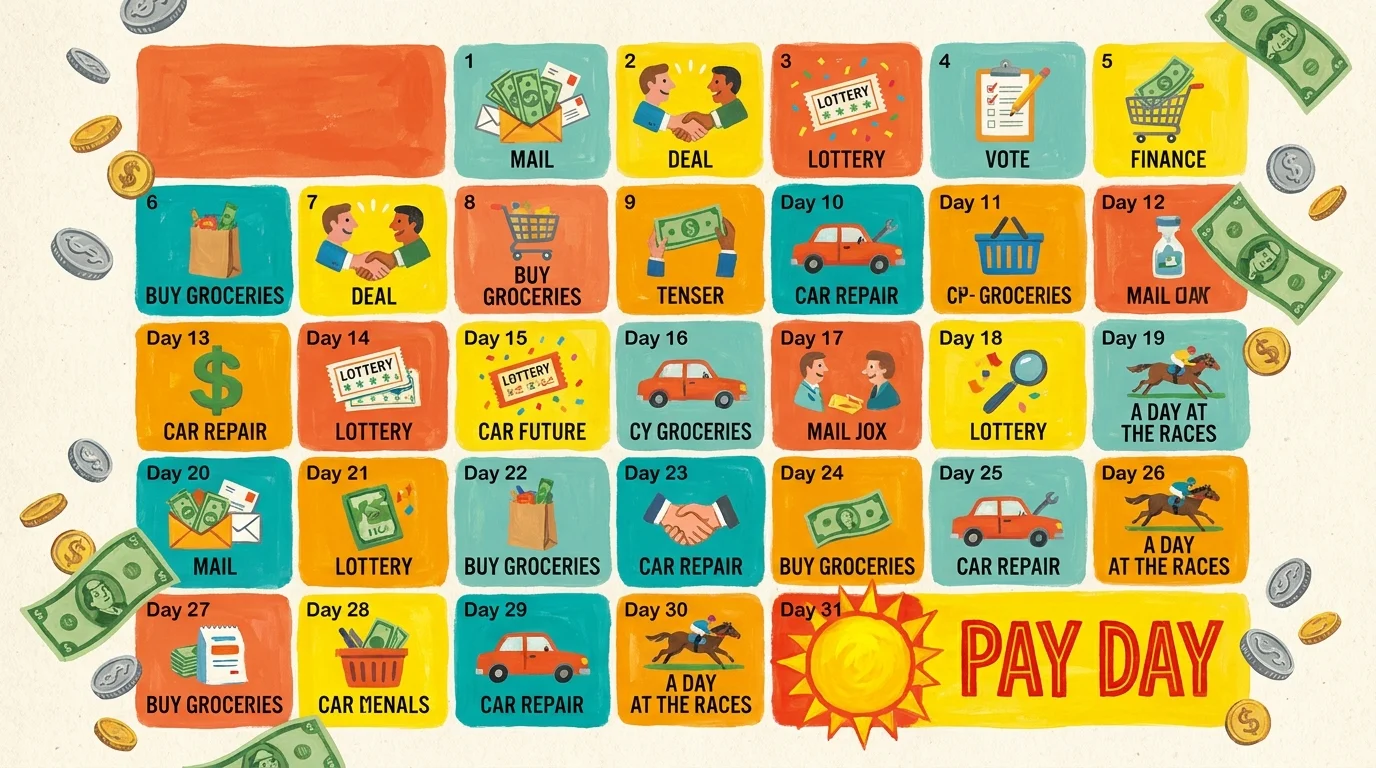
Designed by Paul J. Gruen and published by Parker Brothers, Pay Day offered a relatable alternative to the monopolistic real estate empires of other popular games. Rather than managing millions of dollars, players navigate the highly familiar struggle of stretching a monthly paycheck to cover everyday living expenses.
The game board represents a 31-day calendar month. You roll a die to advance through the days, dealing with the daily realities of adult life. You land on spaces that require you to draw “Mail” cards, which inevitably stick you with unexpected bills, medical expenses, or the occasional lucky postcard. You can take out bank loans to cover immediate shortfalls, but the crushing 10 percent interest rate quickly adds up. The goal is to reach the end of the month, collect your salary, pay off your outstanding bills, and hopefully have a few dollars left over. It is a surprisingly fast-paced and entertaining simulation of household budgeting.
9. Stay Alive (1978)
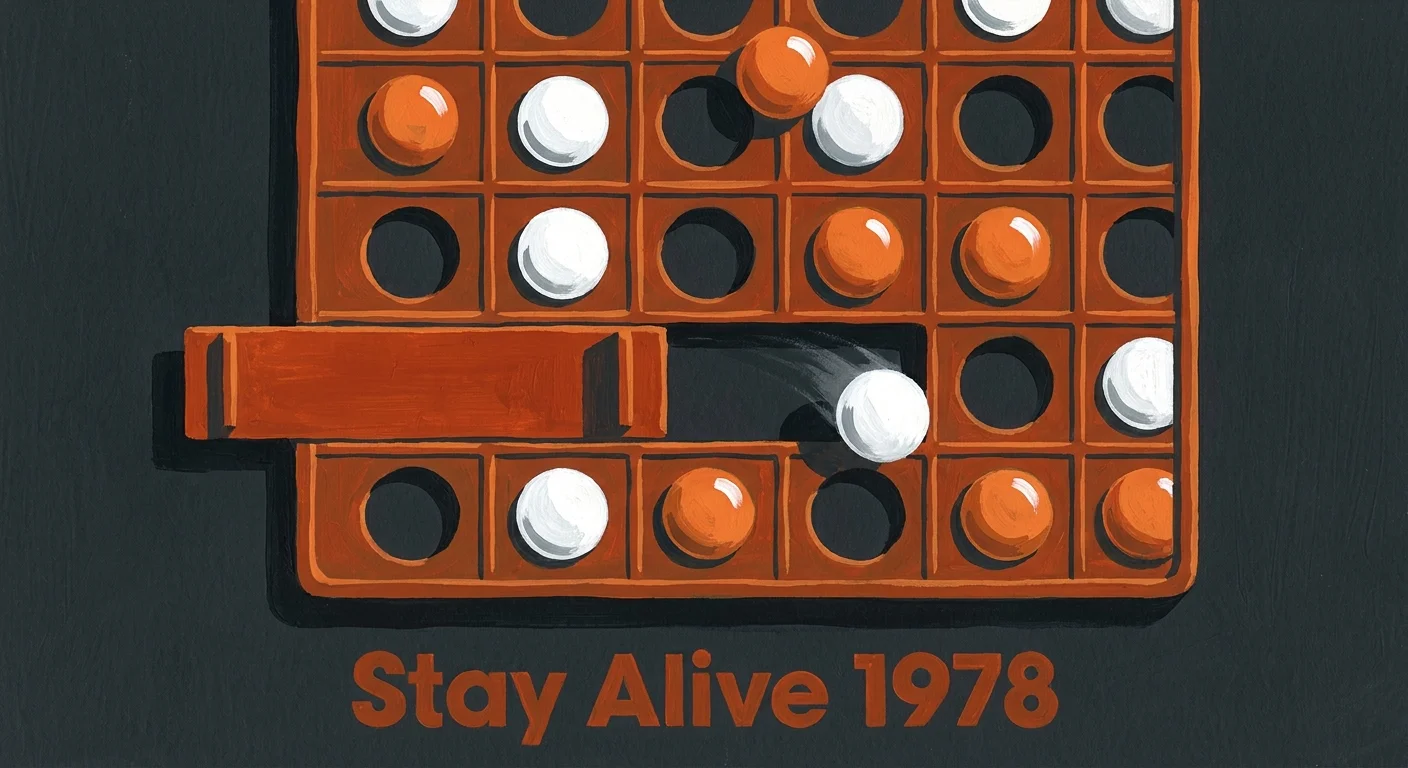
Marketed by Milton Bradley as “the ultimate survival game,” Stay Alive strips away complex rules and financial management in favor of pure, ruthless spatial strategy. The game consists of a plastic grid elevated above a catch tray. Before play begins, you place your colored marbles onto the solid spaces of the grid.
The board features a series of horizontal and vertical sliders along the edges. Each slider has specific holes punched through it, and can be moved forward or backward by one notch per turn. On your turn, you adjust a single slider. Your goal is to align the hidden holes beneath your opponents’ marbles, sending them dropping through the board and eliminating them from the game. Of course, moving a slider to sink an opponent might inadvertently open a hole beneath your own marble. It requires excellent spatial memory and a bit of luck to be the last player with a marble standing.
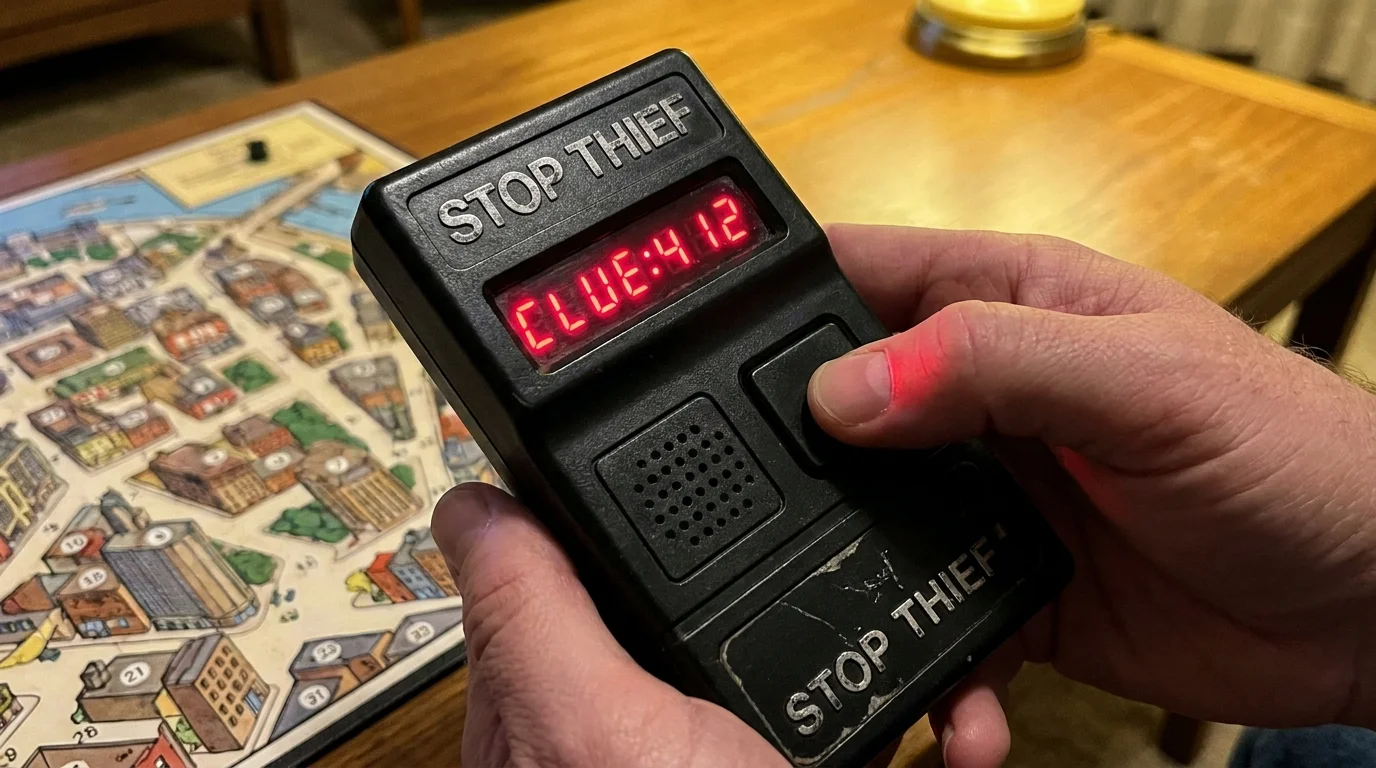
10. Stop Thief (1979)
As the 1970s drew to a close, Parker Brothers integrated microchip technology into tabletop gaming with Stop Thief. You take on the role of a private investigator trying to track down an invisible criminal moving through a city board composed of numbered streets and specific buildings, like a bank and a jewelry store.
The star of the game is the Electronic Crime Scanner, a massive, calculator-like device that acts as the game master. You press a button on the scanner, and it plays 8-bit sound effects that correspond to the thief’s actions. You might hear the squeak of a floorboard, the shattering of a glass window, or the distinctive chime of subway doors closing. By matching these audio clues to the layout of the board, you deduce the thief’s exact location. You then rush your investigator pawn to that numbered space and type the number into the scanner to attempt an arrest. According to Restoration Games, which successfully crowdfunded a modern app-driven version in 2017, the original audio-deduction mechanic remains a masterclass in hybrid game design.
What Can Go Wrong When Buying Vintage Games
Hunting down original 1960s and 70s board games online, at flea markets, or in antique malls is a rewarding hobby. However, because these games rely heavily on physical gimmicks, you need to shop carefully to avoid wasting your money on unplayable sets.
- Missing custom pieces: A game like Bermuda Triangle is entirely useless if the plastic ships are missing their metallic bases. Always verify with the seller that the specific mechanical components that make the game work are included and fully functional.
- Corroded battery terminals: Electronic games like Stop Thief or Operation often sat in hot attics for decades with heavy D-cell batteries left inside. Ask the seller to test the electronics or provide clear, well-lit photos of the battery compartment before you commit to purchasing.
- Warped cardboard components: Games stored in damp basements often suffer from severely warped boards. If a 3D board cannot lay completely flat, it ruins the delicate mechanical functions of games like King Oil or Stay Alive.
- Paying premium prices for incomplete sets: Do not pay top dollar for a “rare” vintage game unless the seller explicitly guarantees that it is 100 percent complete, right down to the original instruction manual and the correct number of money bills.
Frequently Asked Questions
Are vintage board games from the 1960s and 70s worth money?
Some complete, well-preserved games hold significant value, especially if they feature working electronics or fragile 3D components. Games like King Oil or the original Stop Thief can sell for a premium to dedicated collectors. However, most common vintage games sell for modest prices unless they are rare first editions in mint condition.
Can I still buy these classic board games today?
Many of these games—such as Twister, Operation, and Pay Day—are still manufactured today, though modern versions often feature updated artwork and cheaper plastic components. For out-of-print games like Bermuda Triangle, you will need to search secondary markets, antique stores, or online auction sites.
How can I fix broken electronics in a vintage game?
Battery corrosion is the most common issue in vintage electronic games. You can often clean the battery contacts with a cotton swab and a small amount of white vinegar. If the internal wiring is damaged, it requires basic soldering skills to repair. Always test the electronics with fresh batteries before assuming a game is permanently broken.
Whether you choose to hunt down an original copy of Masterpiece at an antique store or pick up a newly printed version of Acquire, integrating these mid-century classics into your routine guarantees an evening of memorable, hands-on fun. This is general informational content based on widely accepted guidance. Individual results vary. Verify current details—rules, prices, eligibility, regulations—with official sources before making important decisions.
Last updated: May 2026. Rules, prices, and details change—verify current information with official sources before acting on it.









Leave a Reply