
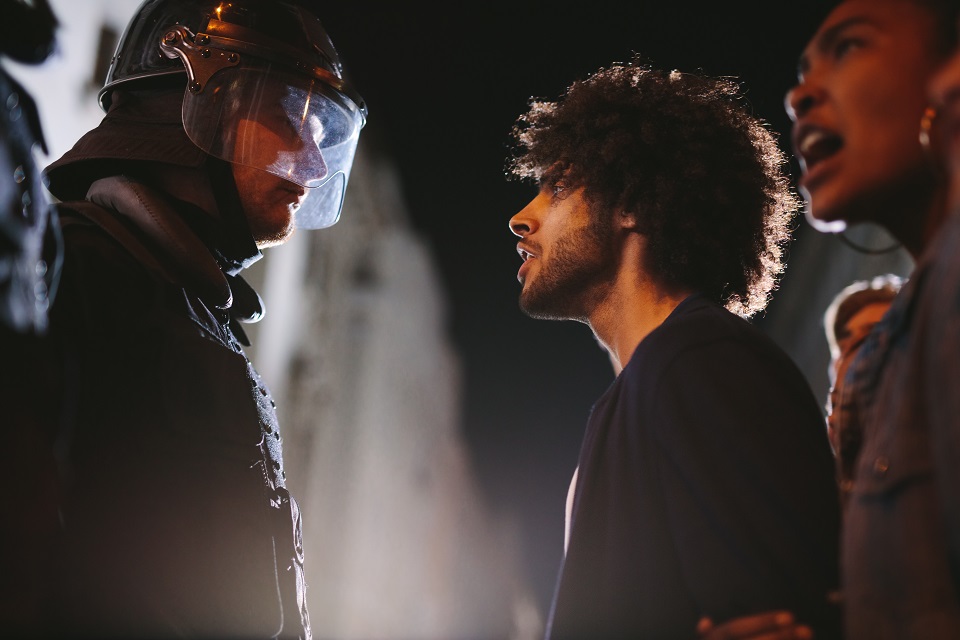
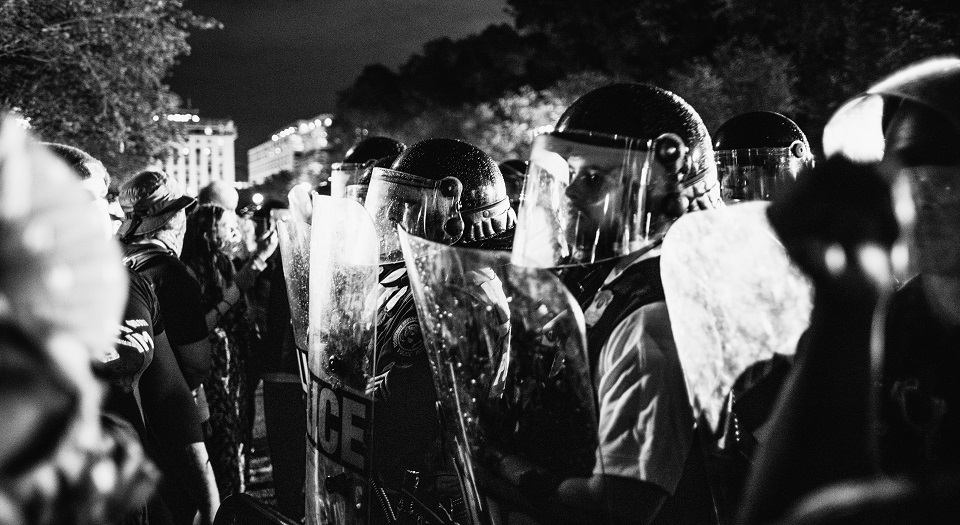
Just as the history of the United States has been rife with pandemics, its history of the use of unwarranted or excessive force by police officers against its civilian population has also been widespread and sadly historic. However, unlike the current coronavirus pandemic, there doesn’t appear to be white coated boffins working away in a laboratory to find a cure to the disease of systemic and institutional racism.
As the memorial service for the late George Floyd took place in Minneapolis, many speakers talked of putting an end to the disproportionate use of force against African American’s. Most notably, the civil rights leader and founder of the National Action Network, Rev. Al Sharpton, who delivered a eulogy denouncing racism and calling for the criminal justice system to finally be held accountable.
As he gave his poignant and stirring speech, he pointedly stated “The reason we could never be who we wanted to be and dreamed of being is you kept your knee on our neck,” and it would be hard to argue that the knee of institutions who are supposedly there to protect and serve, has not been pressing down on the collective jugular of African American communities for many decades, but where did it all begin?
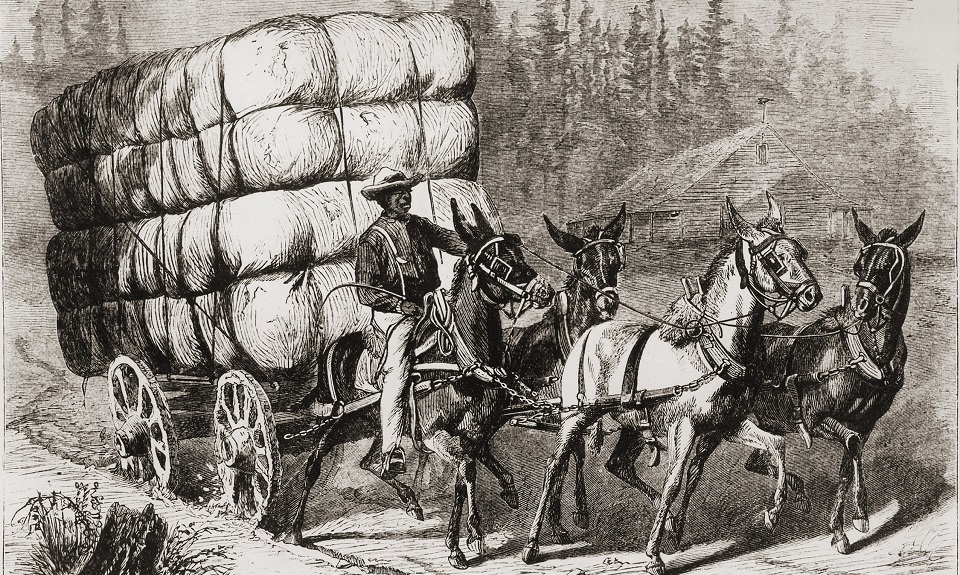
Although the United States has a sordid history with regards to its treatment of African American’s, and minorities in general, beginning with transatlantic slave trade and supposedly ending with the passage of the Thirteenth Amendment in 1865, it was a different movement of people that has helped shape modern attitudes to this social minority, despite being a statistical majority.
Referred to as the ‘Great Migration’, beginning in the early years of the twentieth century many African American’s began leaving the hostility and violence of the rural South and began moving into urban areas of the North and West. This mass migration would be most prevalent in the post Second World War years.
Many believed that because the legislation that freed them was created and subsequently ratified in the northern and western states, they would find more freedom and considerably less persecution and violence. Unfortunately, most white communities, and their white police departments, were unaccustomed to and unprepared for the presence of African Americans.
Sadly, much like their southern counterparts, the majority of white communities in the north and west shared the deeply ingrained stereotypical view of the black man and woman as somehow being subhuman. There arrival in these communities were met with the same fear and hostility they had so desperately tried to escape.
Exacerbating this problem were the attitudes of the authorities who intrinsically believed that African Americans, especially the men, had an inherent tendency towards criminal behavior and that would require them to keep an almost constant eye on them, lest their communities fall into mayhem and chaos at the hands of a seemingly genetically inferior people.
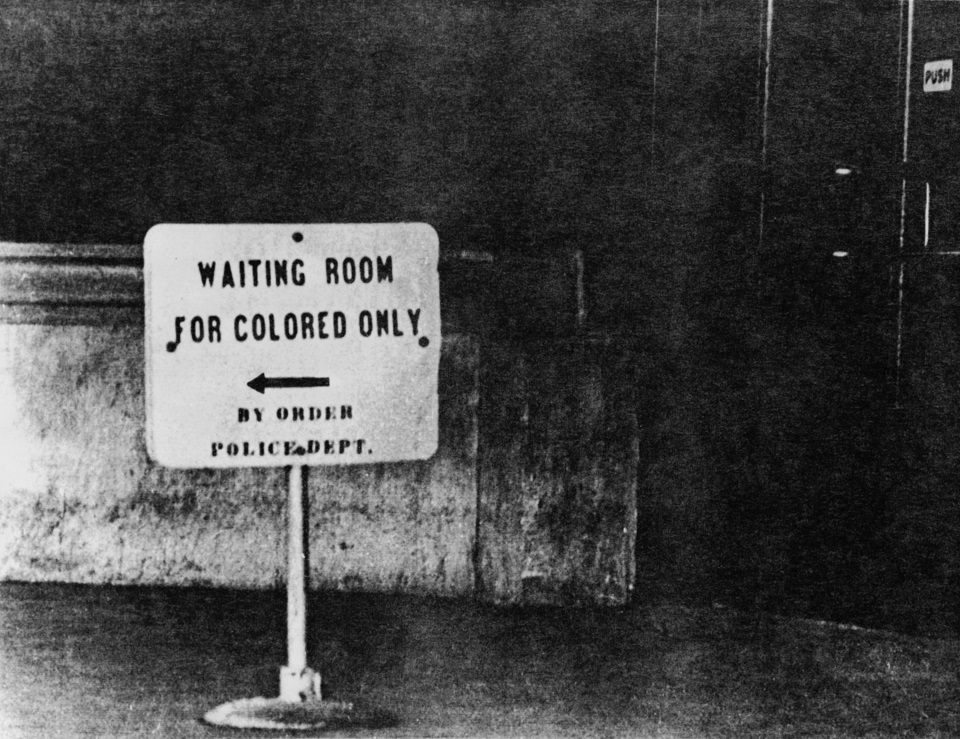
In the interests of ‘protecting’ the white citizens, the authorities decided that the restriction of movement of African Americans should not only be required but be fundamentally essential to maintaining law and order. This idea of ‘segregation’ would take hold by the mid-1950s as urban police forces solidified their mandate to, in essence, protect whites against blacks, and in doing so, opening a socio-economic divide that last to this day.
Although the dictionary definition of the word ‘brutality’ translates to ‘savage physical violence; great cruelty’ it would be translated into the many languages of persecution. That persecution would of course come in the form of physical assaults, beatings and the excessive use of force but the modern black experience was not limited to violence in its physical form.
Black men and women were routinely subjected to unlawful arrests, verbal abuse, racial slurs and threats, sexual assaults against African American women, and the murders of innocent civilians at the hands of the police. Corruption would play its part as well, as some officers were found to be complicit in drug dealing, prostitution, burglaries, protection schemes, and gun-smuggling within African American neighborhoods.
The view from the white communities up until this point was largely muted as the large-city newspapers, whose readerships was predominantly white, were shielded to the violence and urban decay suffered by their African American neighbors, mostly because the brutalization and subjugation of these poor communities was not deemed newsworthy.
The black press however, would regularly have front-page articles decrying the brutality of the police. Civil rights advocates would compile thousands of affidavits and letters from African Americans documenting their direct experiences. As the 50’s moved into the 60’s, the white communities would become all too aware of what was happening on the streets of America.
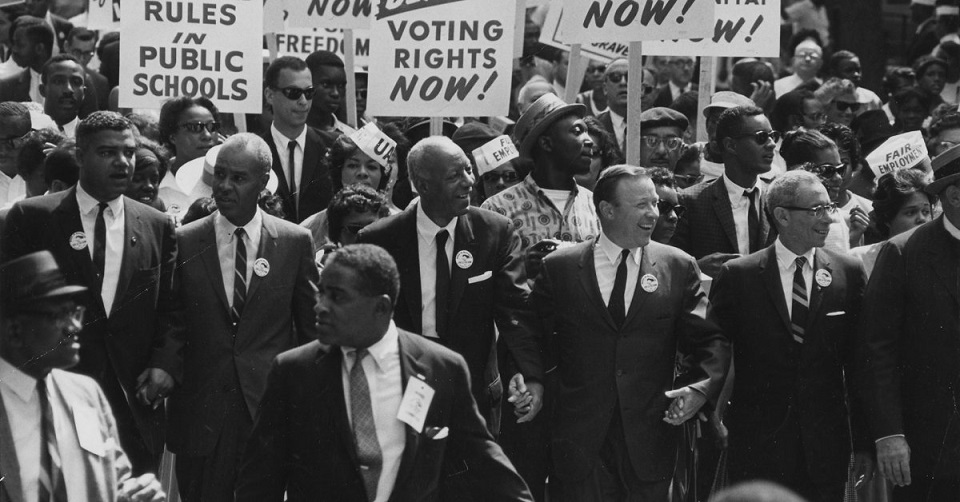
The 60’s would see the civil rights movement really take shape as black Americans began to assert their formal rights and liberties. They demanded that they be respected by local governments, judiciaries, and law-enforcement agencies. Despite the Pledge of Allegiance promising liberty and justice for all, they would see no such justice, only an increasing backlash of hatred and violence.
In response to the escalating violence, especially towards peaceful protests, the assertion of black rights would see an explosion of race riots in urban America, such as the Los Angeles Watts Riots of 1965 which would result in 34 deaths and over $40 million in property damage. Then there was the Detroit Riot of 1967, also known as the 12th Street Riot, which exploded into one of the deadliest and most destructive riots in American history at that point, after the police raided an unlicensed, after-hours bar. This riot would receive extensive media coverage and open the eyes of many to fiery chasm between the police and the black communities.
By the 70’s, the socio-economic divide that had long been a contributing factor in the widening gulf between white and black communities, saw an escalation of urban crime rates in predominantly African American and other minority neighborhoods. This just reinforced the idea in the minds of white police officers and whites in general that black people were inherently criminal. This would be reflected in the racially charged politics and policies of the day, that many criticized as just criminalizing of the black poor and working class.
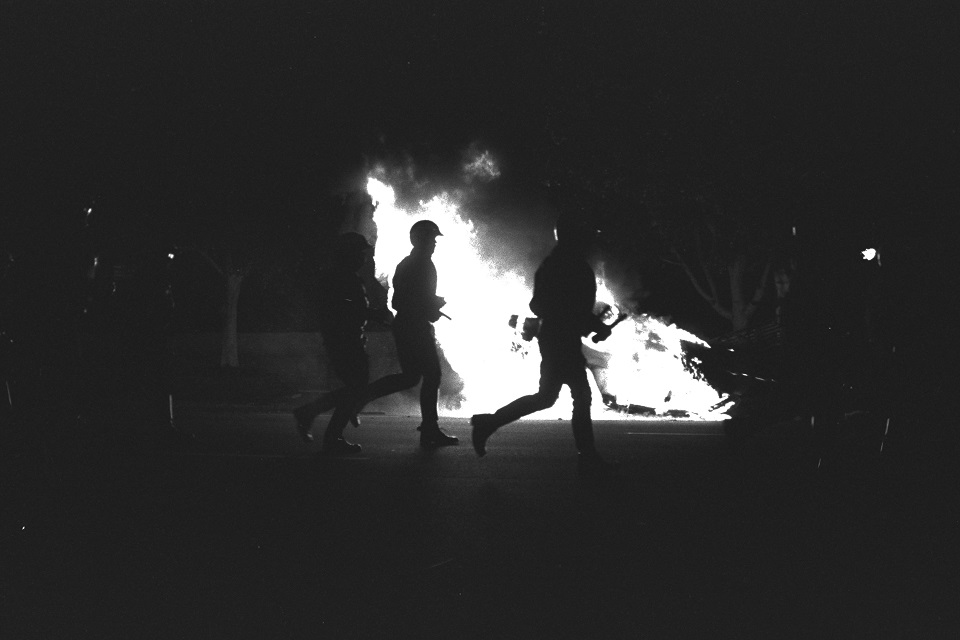
The 80’s would see another major issue thrown into an already bubbling mix, the ‘War on Drugs’. Although the rates of drug use for African Americans, Latinos and Whites were almost equal, there was a massive inequality in African American and Latinos sent to prison for drug related crimes. Riots would also rear their head again in 1980, when in the Liberty City section of Miami, the police killed an unarmed African American man. Over the next three days 18 people were killed and some 1,000 arrested, with more than $100 million in property damage.
The 90’s would continue with the disproportionate mass incarceration of racial minorities, socio-economic disparity and the continuation of the now seemingly common place police brutally. Nothing would encapsulate this trinity of social malaise than the beating of Rodney King by Los Angeles police officers in 1992. Their trial and subsequent acquittal on charges of assault with a deadly weapon and excessive use of force would light the touch paper of a seething resentment that was just waiting to explode.
The LA Riots would become one of the most destructive race riots in American history as over a six day period, 50 people were killed, more than 2,300 were injured and the damage caused would not just be in dollars and cents, and estimated $1 billion, but in the America psyche itself as the gap between white and black became as vivid as the flames now engulfing America’s second most populous city.
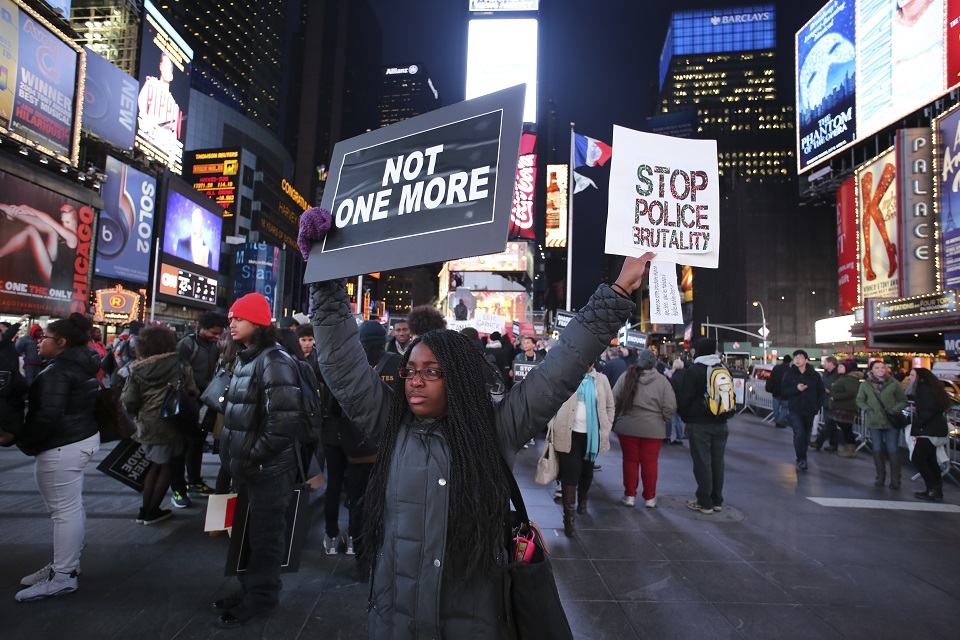
And here we are in the 21st century. With the birth of a new century comes hope, and there has been hope for some. There has been a move towards a more equal and fair society for women, the continuing recognition and changing attitudes towards the LGBTQ community and new generations of young men and women who wish for a more inclusive and tolerant society. Sadly, this can not be said for the African American citizens of a nation that prides itself on being the bastion of democracy and leader of the ‘free’ world, while denying it’s own people their true freedom.
There is a renewed hope, if not a tenuous one, that the unlawful killing of George Floyd and the subsequent arresting and charging of the officers involved, will create a new and lasting change in American society. However, we have been here before. In the last six years alone we have seen the unlawful killing at the hands of the police of Eric Garner, Michael Brown, Tamir Rice, Walter Scott, Alton Sterling, Philando Castile, Stephon Clark and Breonna Taylor to name a few.
George Floyd’s name has now been added to an unwanted list, one written in blood and nailed to the door of history. There it shall remain forever. We can only hope that this time, the door of history isn’t kicked down, but open for all to enter in peace and unity.




I hate violence period but if you don’t break the law the Police should leave you alone. Obey the law and don’t get into trouble and you should be alright.